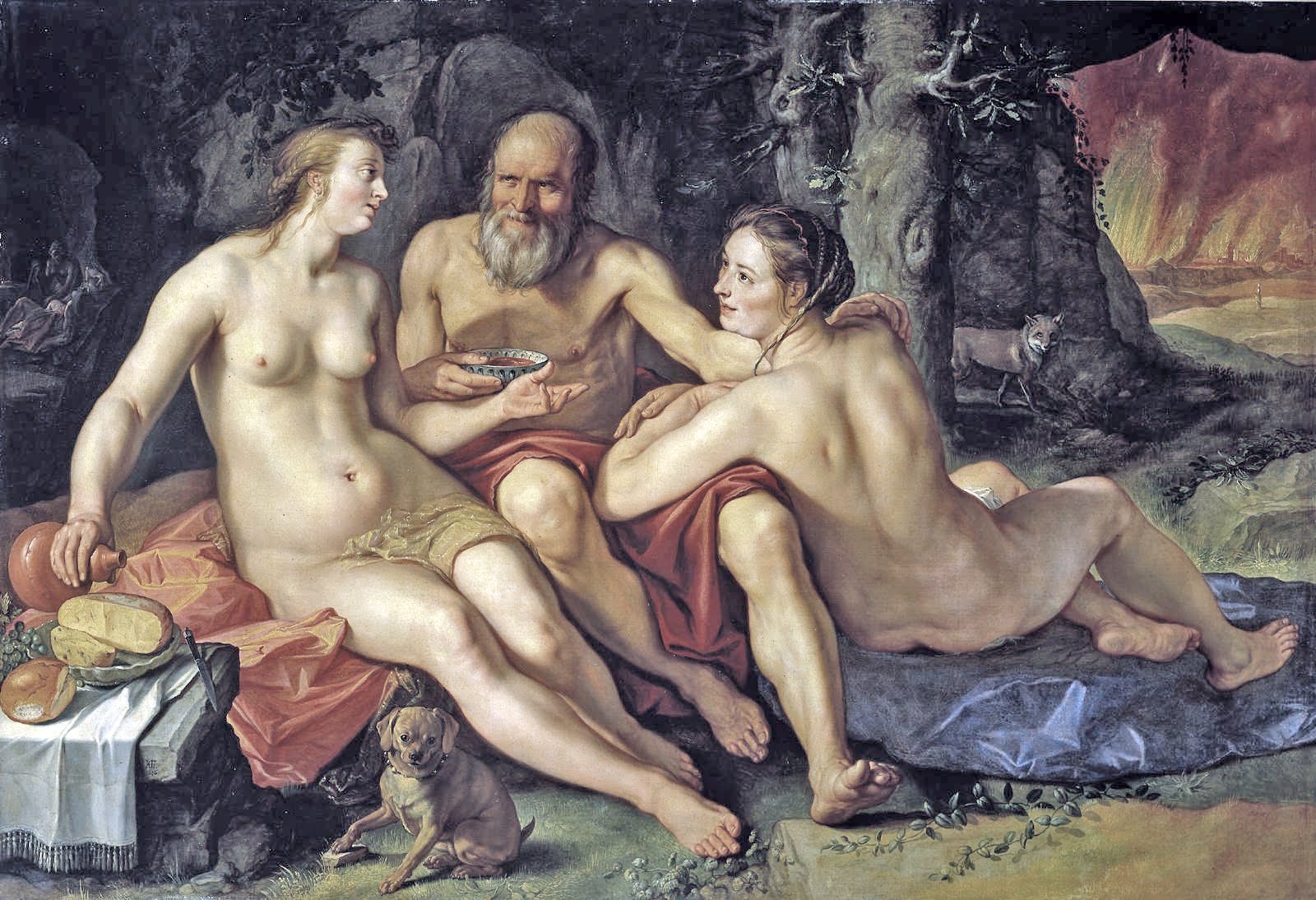
Image: Lot and his daughters (1616), oil on canvas painting by Dutch painter Hendrik Goltzius (1558-1617), size 140 cm x 204 cm, located at Rijksmuseum Amsterdam, Amsterdam, Netherlands. A note with this digitally altered picture explains, ‘In the left, Lot is sleeping, after being seduced by his daughters. The fox behind the tree symbolizes female cunning. In the background in front of the burning city is the pillar of salt, Lots wife.’ The pillar of salt referred here is the formation of a rock figure on Mount Sodom, Israel, as you can see in the photo Lot’s Wife Pillar on Mount Sodom, Israel – CLICK to view.
As the story in the Bible goes (Genesis, read in the link above), without his wife, who defied the angels’ advice and looked back on Sodom and was turned into a salt pillar, Lot left Zoar. He retired with his two daughters to a cave in a nearby mountain. Lot's daughters, who secretly took the responsibility to bear children to preserve Lot's family line, got their father drunk enough to have sexual intercourse with them on two consecutive nights. In turns, each daughter had sex with her father, each becoming pregnant (In Genesis 19:30-38). The first son was named Moab, literally meaning ‘from the father’, who became the patriarch of the nation, Moab. The second son was Ammon (son of my people), who became the patriarch of the nation of Ammon.