‘Perseus and Andromeda’ (1679) painting by French painter Pierre Mignard (1612-1695), oil on canvas, 150 cm x 198 cm, located at the Musée du Louvre, Paris, France. The scene shows the King of Ethiopia Cepheus and Queen Cassiopeia thank Perseus for having saved their daughter Andromeda, offered in sacrifice to sea monster Cetus.
According to Greek mythology, Andromeda was the daughter of Cepheus and Cassiopeia, the king and queen of Ethiopia. Her mother Cassiopeia bragged around that Andromeda was more beautiful than the Nereids, the daughters of the Sea God Nereus and often seen with Poseidon.
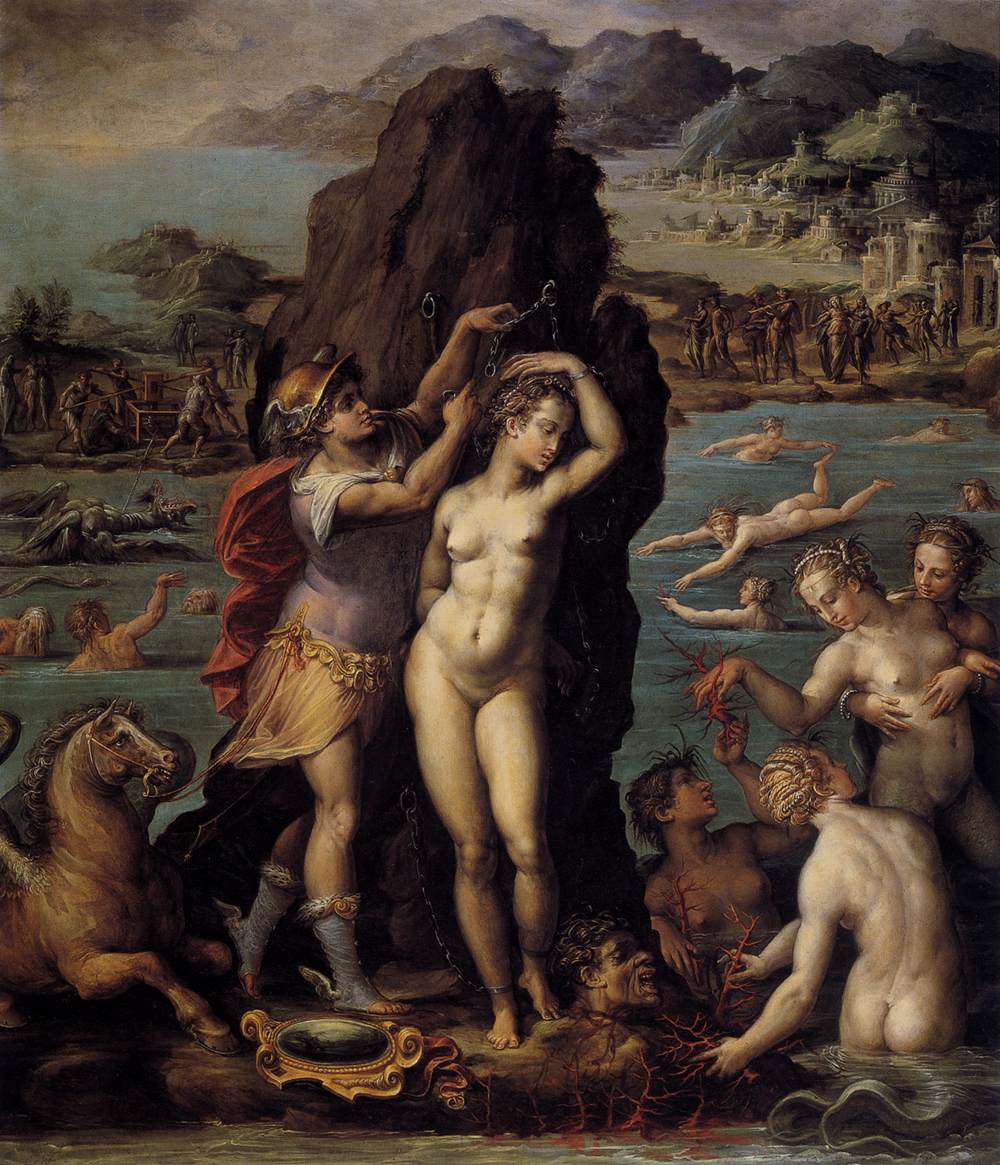
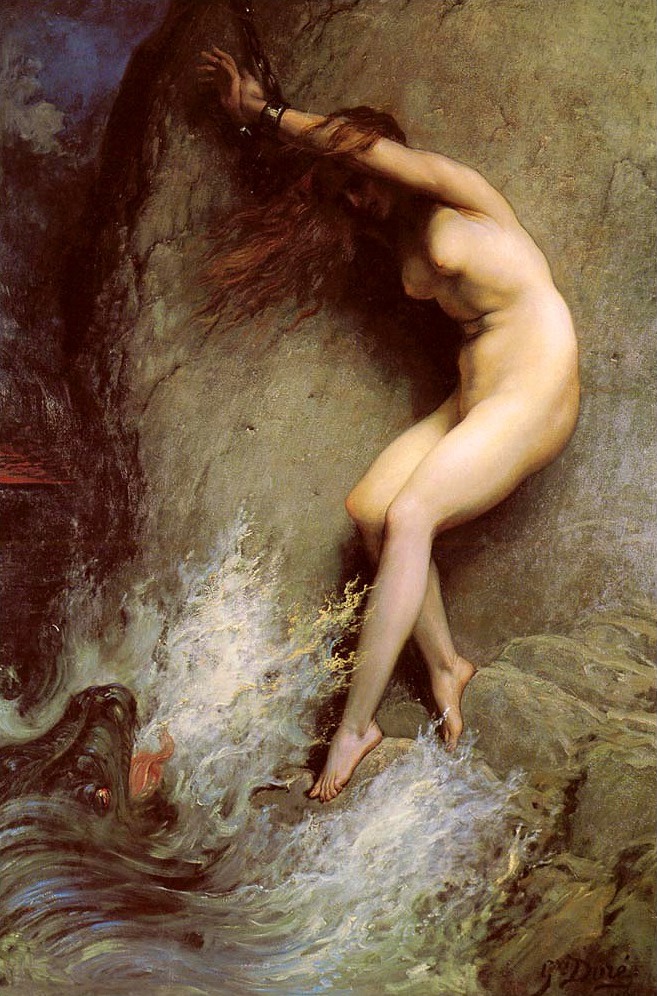
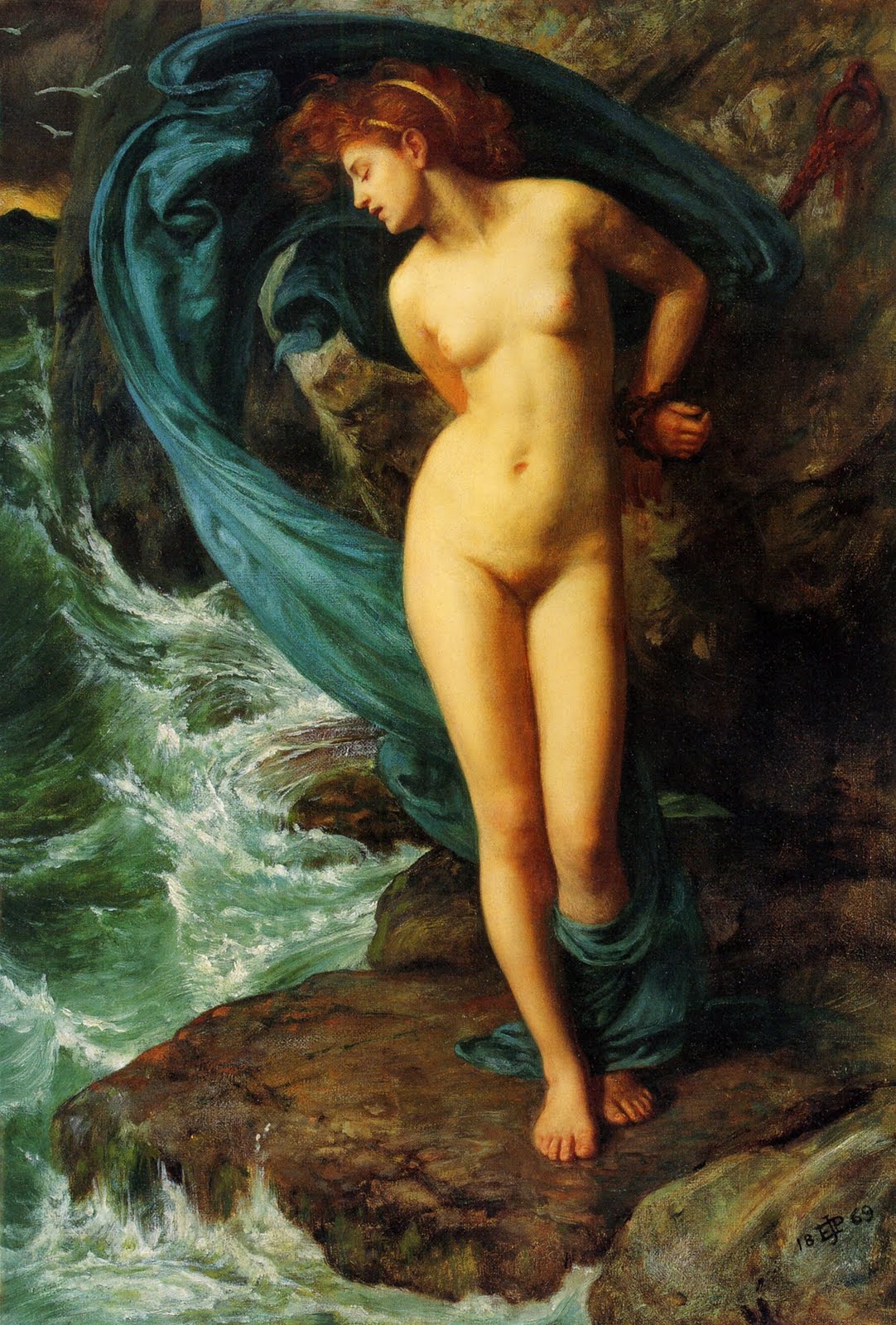
To punish Queen Cassiopeia for her arrogance, Poseidon, brother of Zeus and god of the Sea, sent a sea monster, Cetus, to ravage Ethiopia. The desperate King Cepheus consulted the Oracle of Zeus, who said that there would be no respite until the King sacrificed his virgin daughter Andromeda to the sea monster. So, Andromeda was chained naked to a rock on the coast of Jaffa - most paintings and art objects depict the theme of Andromeda chained to the rocks.
However, Perseus slew the sea monster Cetus, saved Andromeda and married her, who was previously promised to her uncle Phineus. At the marriage there was a quarrel between Perseus and Phineus, who was turned to stone by the sight of the Gorgon's head.
Andromeda followed her husband to Tiryns in Argos, where they became the ancestors of the family of the Perseidae through the line of their son Perses. Perseus and Andromeda had seven sons; Perseides, Perses, Alcaeus, Heleus, Mestor, Sthenelus and Electryon, and a daughter, Gorgophone. Their descendants ruled Mycenae from Electryon down to Eurystheus, after whom Atreus attained the kingdom, and would also include the great hero Heracles. According to this mythology, Perseus is the ancestor of the Persians.
After her death, Andromeda was placed by Athena amongst the constellations in the northern sky, near Perseus and Cassiopeia. Andromeda is represented by the constellation Andromeda which contains the Andromeda Galaxy. Four constellations are associated with the myth: Cepheus, Cassiopeia, Andromeda, and Cetus.